The ForgePuls Inspection Platform
Edge-native computer vision purpose-built for foundry and forge shop environments. Runs on-premises, integrates with your existing MES, and gets smarter with every part.
Inspection at press speed, not lab speed
Traditional quality inspection pulls parts for offline measurement. By the time you find a problem, hundreds of defective parts have left the line. ForgePuls inspects every part inline at up to 12 parts per minute with a 43ms average latency per inspection cycle.
The system classifies each part as PASS, REVIEW, or REJECT with a confidence score and records the defect type, location on the part, and the process parameters active at time of inspection.
- Up to 12 parts/minute throughput
- 43ms average inspection latency
- PASS / REVIEW / REJECT classification
- Defect location mapped to part coordinates
What the models detect
Trained on 4.2 million labeled images across sand casting, HPDC, gravity die casting, and closed-die forging.
Surface Cracks
Hot tears, cold cracks, heat-check patterns, and grinding cracks. Configurable minimum crack length from 0.5mm to 0.08mm depending on camera resolution.
Porosity
Gas porosity and shrinkage porosity visible at part surface. Multi-spectral imaging extends detection to subsurface pores within 1.5mm of surface.
Cold Shuts and Laps
Detects incomplete fusion between metal streams - a common HPDC and gravity casting defect that visual inspection often misses under normal lighting.
Flash and Trim Condition
Measures flash thickness and parting line offset. Distinguishes trim-required flash from within-tolerance flash to reduce unnecessary trimming cycles.
Dimensional Deviation
Photogrammetric measurement of critical dimensions against nominal CAD geometry. Alerts when dimensional drift indicates die wear or thermal expansion trend.
Surface Finish (Ra)
Estimates surface roughness from reflectance data. Flags parts exceeding Ra specification without contact profilometry.

Find the upstream cause, not just the downstream symptom
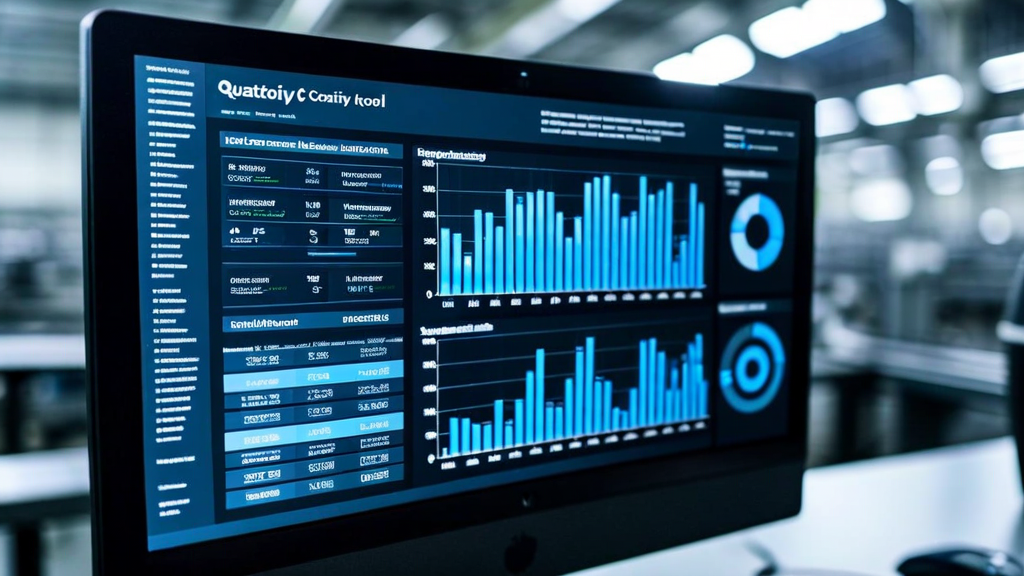
Most inspection systems tell you what failed. ForgePuls tells you why. The process correlation engine records 38 configurable process parameters alongside every inspection result.
Correlation analysis runs automatically every four hours. When a defect rate spike correlates with a specific variable - billet temperature variance, lubrication interval deviation, or tonnage drift - the system surfaces that finding in the operator dashboard.
- 38 configurable process inputs via OPC-UA or analog I/O
- Automated correlation analysis every 4 hours
- Pareto charts of defect causes by shift and die
- Export to SPC software (Q-DAS, InfinityQS, MStat)
Hardware built for the foundry floor
Standard industrial cameras fail within weeks of foundry installation. ForgePuls hardware is rated for the environment.
Vision Node
12MP CMOS sensor, 100fps, IP67 sealed housing. 24mm and 50mm industrial lens options. Operating temperature -10 to 75C. Active cooling standard.
Edge Compute Unit
DIN rail mount. NVIDIA Jetson AGX Orin-based inference engine. 1TB NVMe local storage. Dual Ethernet (plant network + isolated inspection network). UPS 4-hour backup standard.
Structured Light Module
Optional blue LED structured light projector for 3D surface reconstruction. Required for dimensional measurement and subsurface porosity detection applications.
Integrations
ForgePuls writes to your existing systems. No new database, no new dashboards unless you want them.
OPC-UA 1.05
Bi-directional OPC-UA. Reads process parameters from press PLCs and CNC controllers. Writes inspection results and part status back to plant historian or MES.
MES and ERP
REST API and MQTT bridge for SAP, Oracle, Epicor, and Plex. Inspection events post to work order records in real time. Scrap transactions log automatically.
SPC and Quality
Q-DAS qs-STAT, InfinityQS ProFicient, and MStat direct integration. Inspection measurements export in Q-DAS DFD/DFQ format for Cpk and control chart analysis.